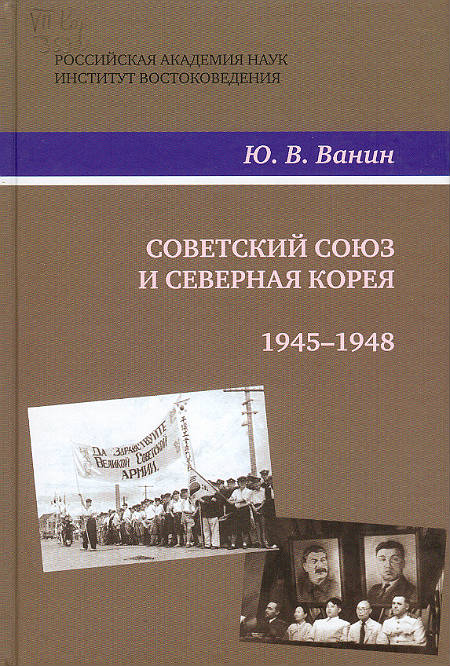
 Советский Союз и Северная Корея, 1945 – 1948
 Советский Союз и Северная Корея, 1945 – 1948
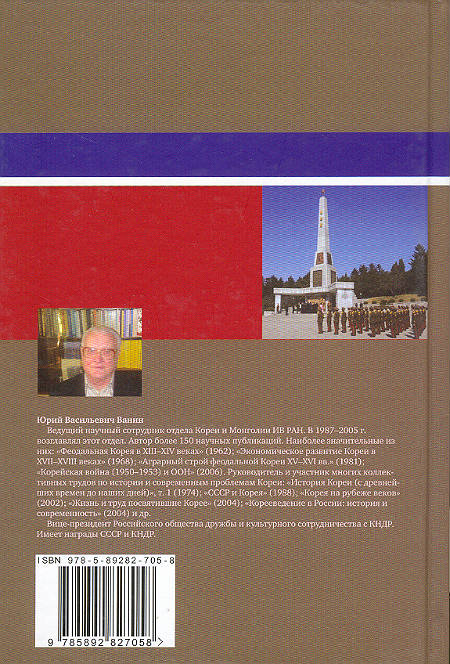
Ванин Юрий Васильевич
Советский Союз и Северная Корея, 1945 – 1948
Ответственный редактор: Воронцов Александр Валентинович
Москва, 2016, 225 стр.
В книге рассматривается политика СССР в Северной Корее после ее освобождения советскими войсками от 40-летнего японского колониального господства. В течение 1945 – 1948 гг. правительство СССР и советское военное командование всемерно содействовали формированию корейских органов самоуправления – народных комитетов и способствовали проведению в жизнь основополагающих демократических принципов государственной власти. Социально-политическое переустройство общества привело в итоге к образованию 9 сентября 1948 г. Корейской Народно-Демократической Республики. Книга состоит из предисловия, четырех глав, заключения. Также прилагаются библиография, аннотация и Summary. Автором была проделана большая аналитическая работа по материалам российских архивов, которые и легли в основу его книги.
English version
This book discusses major forms and contents of the Soviet policies towards North Korea during the above-mentioned period. A detailed account is given to the liberation of Korea from the Japanese colonial yoke in August 1945. Specially stressed in the fact that only Soviet Army that had fought the occupants on the Korean soil is specially stressed. As per the results of World War II North Korea was in the Soviet responsibility zone. Up to Autumn 1948, Soviet Army was stationed there. It created its own administration system for the liberated territory. The book throws light on the structure and functioning of Soviet administration in Korea, as well as cooperation with the nascent organs of indigenous self-governance – People’s Committees. Soviet government and military command promoted by all possible means the formation of indigenous administration along with the corresponding political system, as well as major democratic reforms. There is also a detailed analysis of the circumstances that led to the formation of Democratic People’s Republic of Korea in September 1948. For the first time in Russian historiography, the book informs about dismantling the equipment of some Japanese factories and export of trophies to USSR. The book consists of Introduction, four Chapters, and Conclusion. Bibliography, Annotation in Russian, and Summary are also supplied. The work is based mainly upon the materials from the Russian archives, some of them being introduced to the readers for the first time.